THE QUESTION BEHIND THE WORK
We gained more.
Why is there less
room to move?
A larger body. More functions. Another level.
YUKIFU looks at what growth gives us,
and what it quietly takes away.
01 / BEFORE THE RULES
A world made
with a pencil.
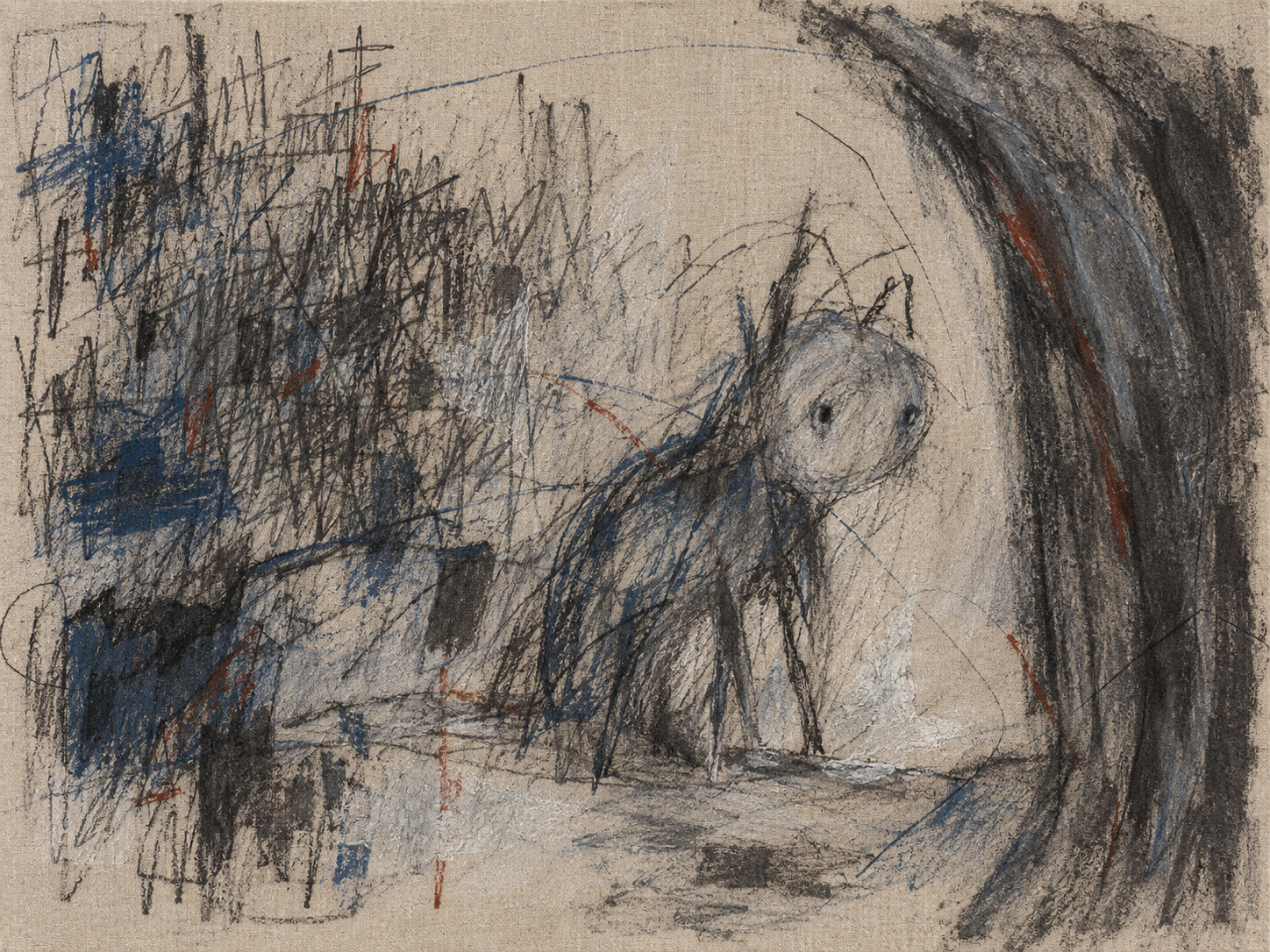
A game drawn in a school notebook can begin with almost nothing: a creature, a path, a few marks that stand for a life. Its rules can change halfway through. A friend adds a line, and the world becomes something else.
This freedom is a starting point for YUKIFU. The awkwardness of a childhood scribble is not a style to perfect. It is a way of keeping possibilities open, before a form has to justify what it is for.
A line can still change its mind.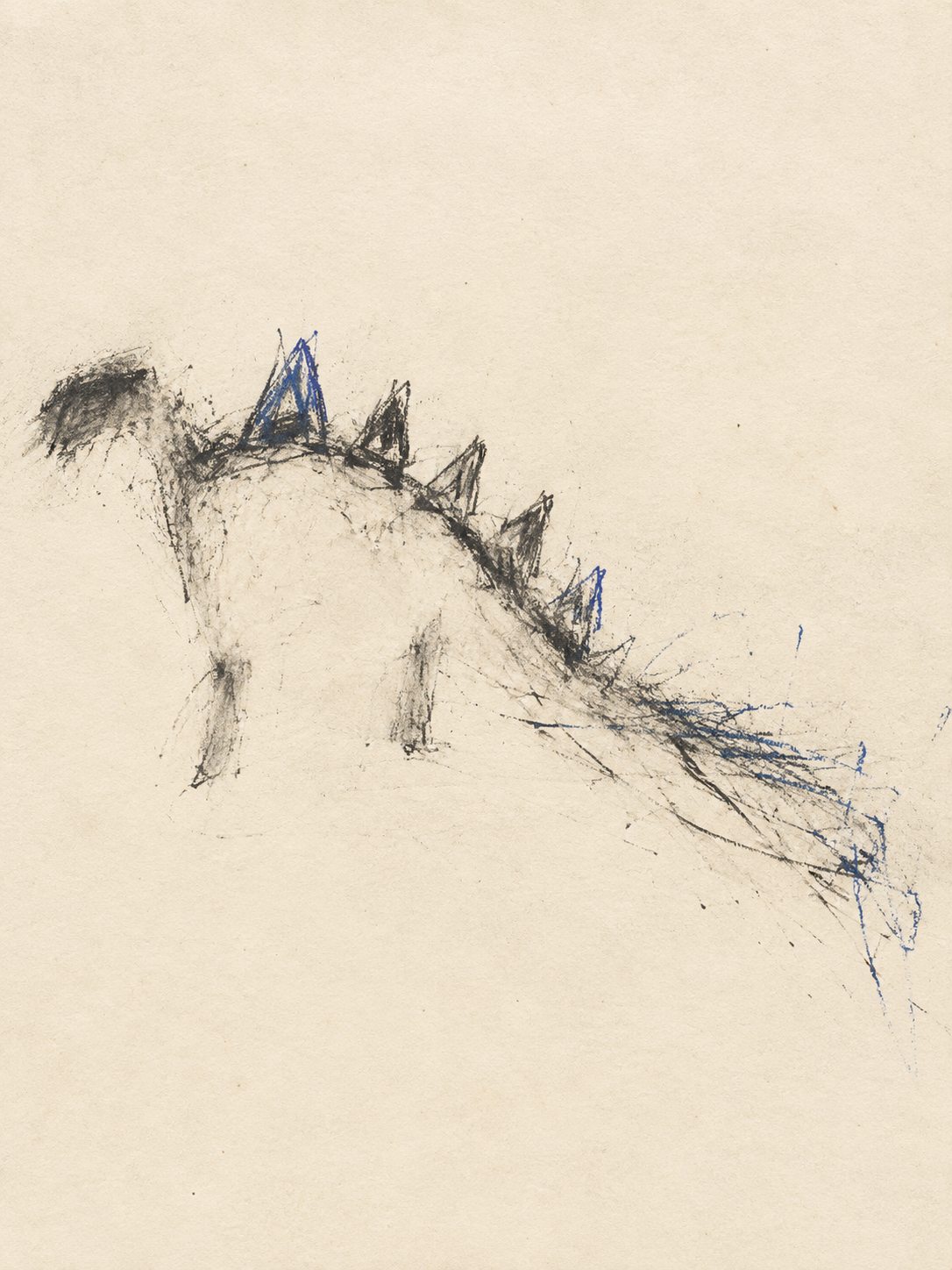
02 / WHEN PLAY BECOMES A SYSTEM
Another level.
A smaller world.
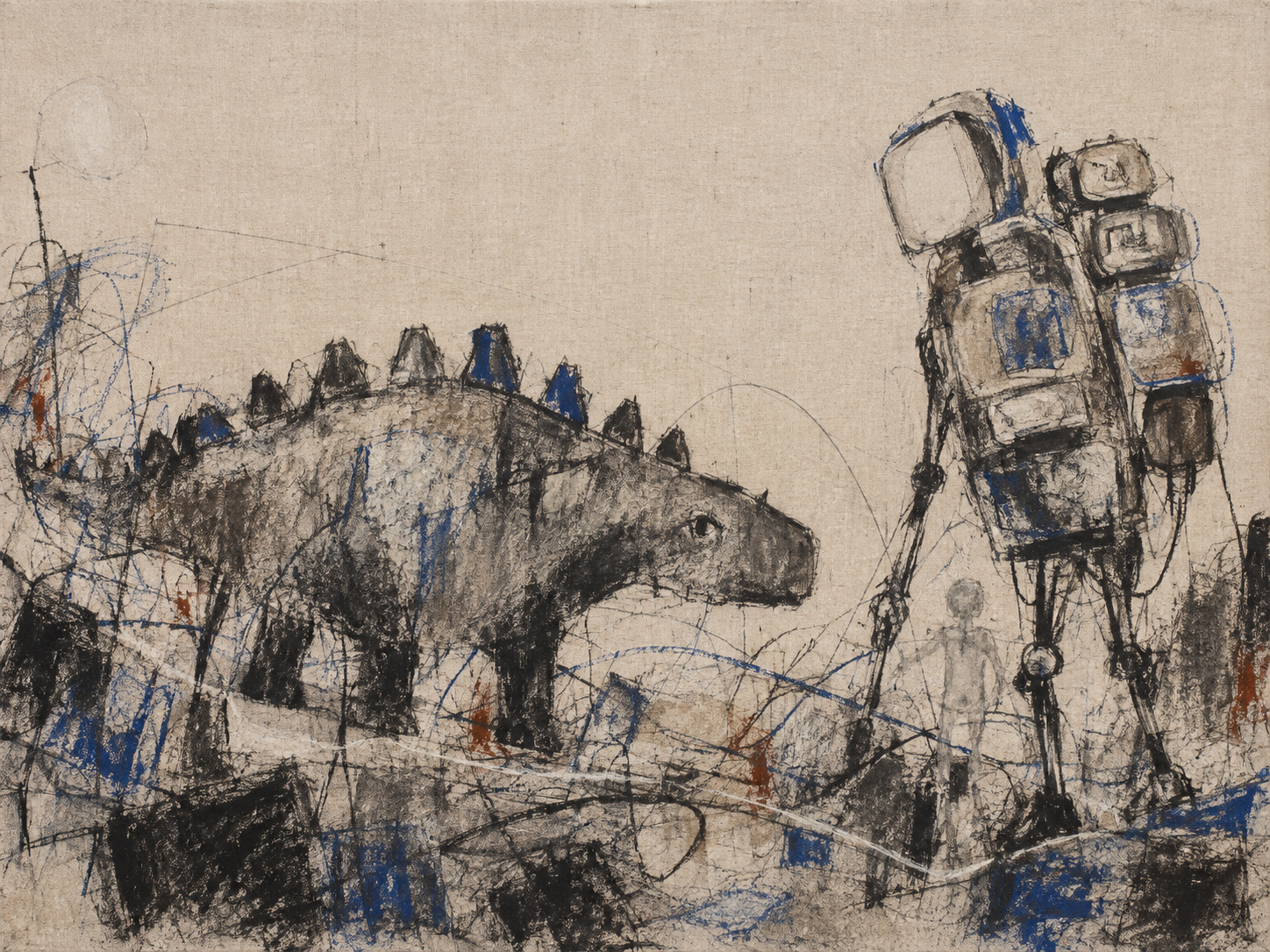
Then the game acquires measures. Progress means collecting more, becoming larger, gaining another function. What once made room for invention begins to organise movement instead.
In these drawings, that contradiction appears through accumulating marks, repeated routes and shrinking intervals. The question is not simply whether growth is good or bad. It is what happens when growth becomes the only way to recognise a better life.
03 / GIVING THE QUESTION WEIGHT
What happens
when a scribble
cannot move?
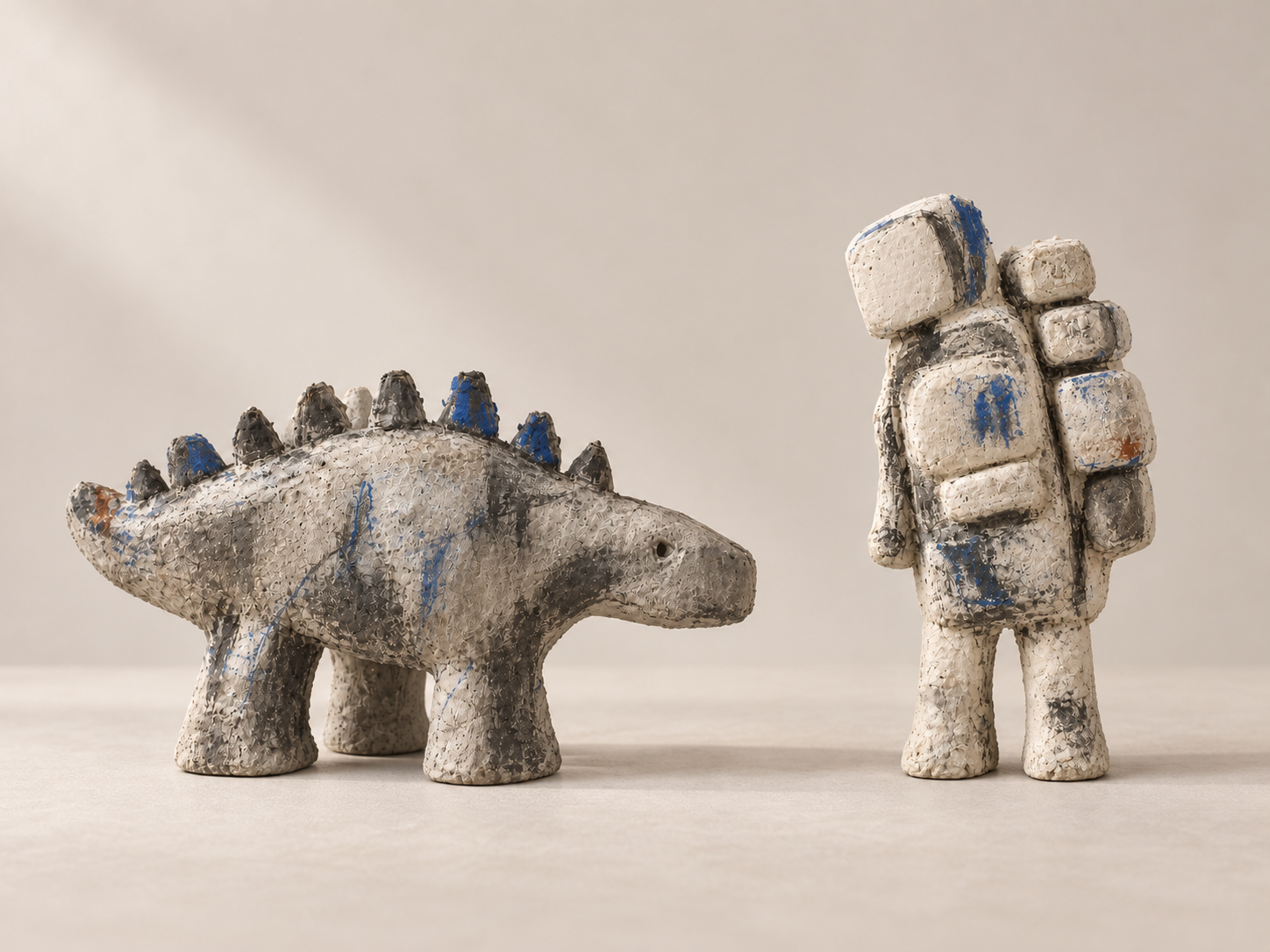
A drawn line can overlap, disappear or start again.
A cast body must negotiate thickness, balance and gravity.
 Explore the casting study ↗
CEMENT / PLASTER / A CHANGE OF CONDITIONS
The proposed move from paper to cement and plaster is more than a change of medium. A light, revisable gesture becomes a body that occupies space. The contradiction between freedom and constraint can begin to acquire an actual weight.
For now, these images are material hypotheses. The next test is physical: what must change when a drawing meets a printed master, a silicone mold and a mixture that has to cure? The answer may alter the original idea rather than simply confirm it.
From image to mold to matter ↗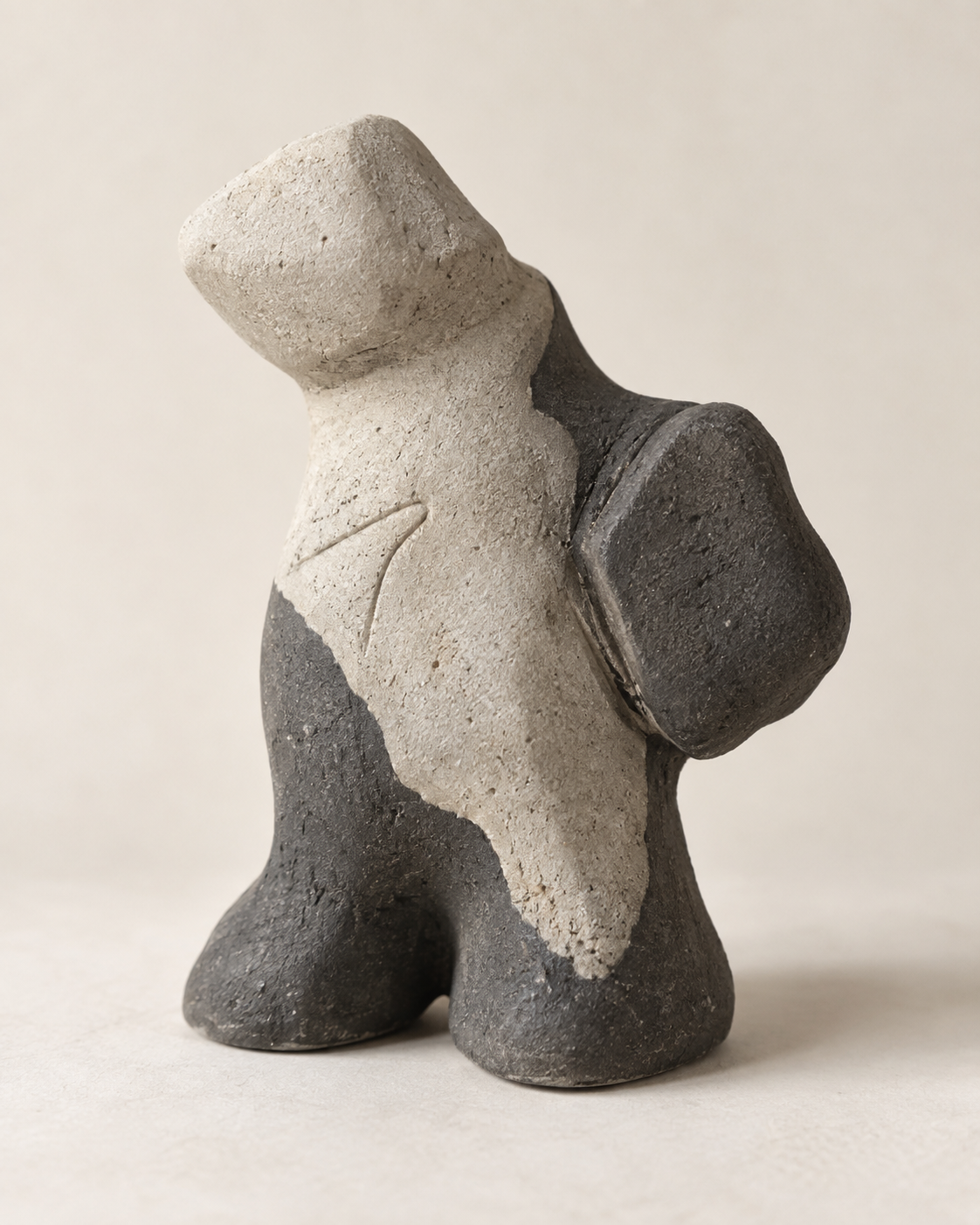
A SECOND MATERIAL QUESTION
Not a character.
A small
presence.
Not every question needs a recognisable figure. In Layered Memory, two mineral tones meet inside an uneven body. An almost-familiar shape appears, then slips back into a gesture.
Its proposed casting boundary is not only a division of colour. It is a place to explore how separate histories might occupy one small object without becoming the same.
Explore Layered Memory ↗A CONVERSATION, NOT A RECIPE
Art history is
a place to ask.
Not a style to borrow.
Questions of memory, material, the body and the unfinished mark place these studies in conversation with a wider history of art. But references alone cannot supply a reason to make something.
The work returns instead to particular choices: why this line, why this weight, why preserve this awkwardness? Its language will develop through those decisions, and through what the material refuses to do.
NEW SERIES / INNER SYSTEMS
A body is more
than its outline.
Inner rhythms meet social pressure.
Machine vision encounters what a surface cannot tell.
Two drawings and two casting concepts.
NEW WORK / PLACE & MEMORY
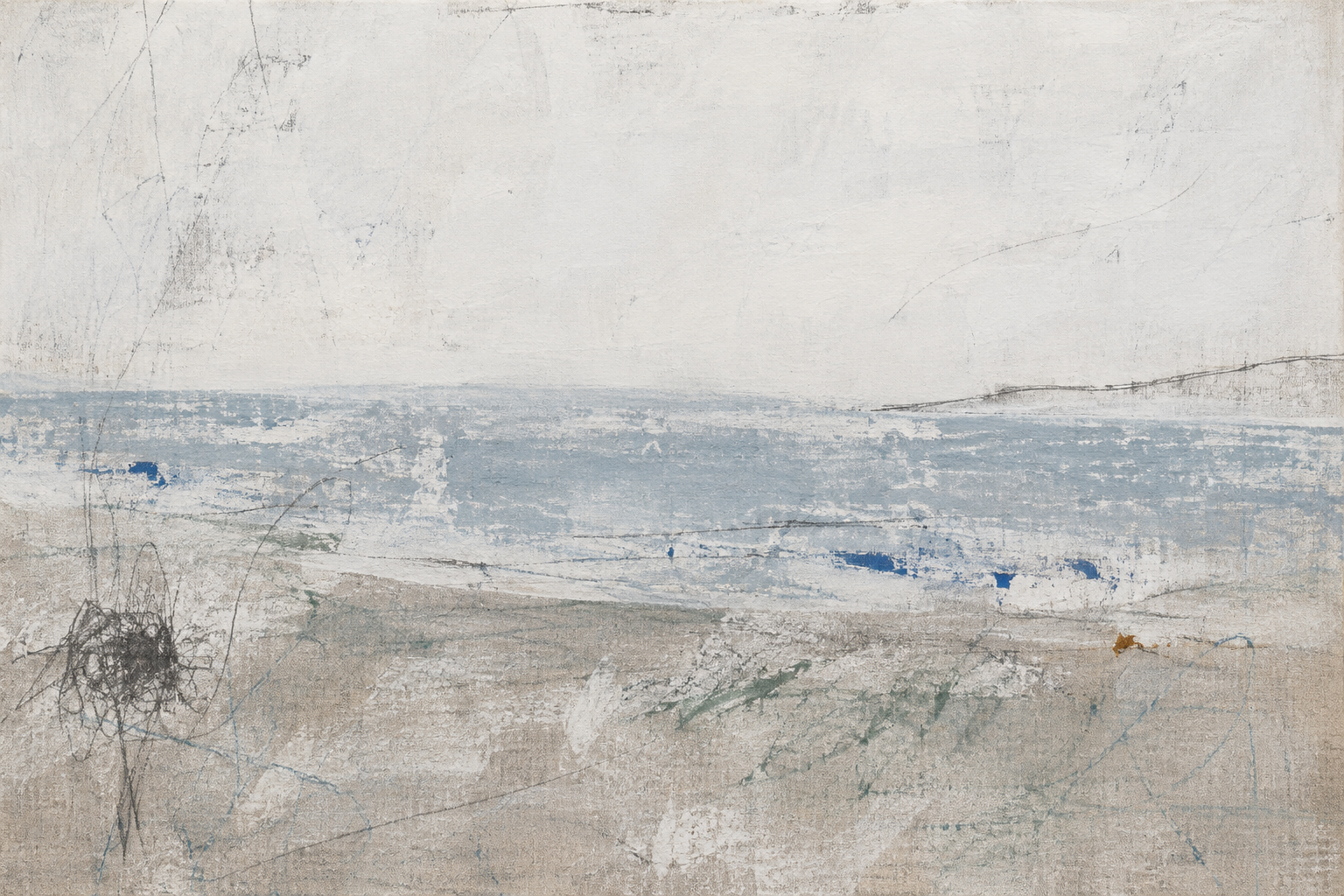
Murrays Bay,
2008.
A shore held in intervals.
North Shore, New Zealand, approached through the distance between marks.
Digital concept. The year names the time evoked, not the creation date.
- 01
Ask
What feels unresolved?
Find a question worth returning to. - 02
Draw
Let several forms answer.
Keep the wrong turns visible. - 03
Make
Move toward a small physical trial.
Let the material push back. - 04
Rewrite
Record what actually happened.
Allow it to change the premise.
Published images are digital concepts. Physical casting, material performance and finishes remain to be tested; future making records will distinguish observations from intentions.